Affiliate disclosure: Abdus Global may earn a commission if you buy through the AliExpress link on this page, at no additional cost to you. The relationship does not affect our selection criteria.
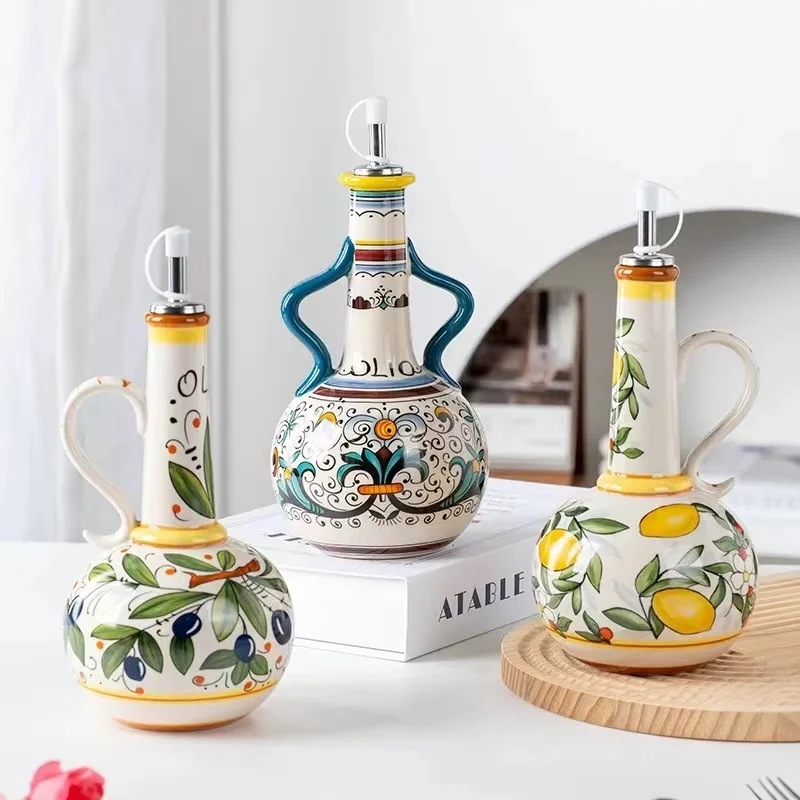
The listing presents decorative ceramic bottles alongside separate pouring-spout accessories. That makes variant selection the first buying check: confirm that the cart names and pictures the complete bottle you want, not only a replacement stopper or spout.
Confirm capacity and usable dimensions
Check the stated liquid capacity, total height with the spout installed, widest body diameter, handle clearance, and weight when filled. A tall narrow neck can look compact while still requiring more vertical space than expected under a cabinet or on a crowded shelf.
Capacity should match how quickly you use the oil. A large bottle reduces refilling but remains exposed to light, heat, and air for longer. A smaller bottle is easier to handle and clean, but may need frequent refilling in a busy kitchen.
Inspect the pouring system
Compare the spout material, cap or flap, air-return path, seal, and how the spout attaches to the ceramic neck. A good fit should pour predictably without the stopper lifting out. The cap should close easily and should not trap residue where it is difficult to clean.
Look for seller photos showing the bottle after pouring, not only staged countertop images. Reviews may identify dripping or loose fittings, but treat them as individual experiences rather than proof that every unit performs the same way.
Check food-contact and glaze information
Do not infer food-contact suitability from appearance alone. Read the seller's current material description for the ceramic body, glaze, stopper, gasket, metal spout, and cap. If the listing makes compliance claims, look for a specific standard, test report, or documentation rather than relying on a generic "safe" label.
Inspect the delivered bottle before use. Do not use it if the interior glaze is cracked, chipped, rough, contaminated, or has an unusual odor that does not clear after cleaning according to the seller's instructions.
Plan for filling and cleaning
A narrow opening may require a funnel and a slim bottle brush. Confirm whether the spout and gasket can be removed, whether the seller permits dishwasher use, and how completely the bottle can dry. Residual water can affect stored oil, so allow all components to dry fully before refilling.
Decorative relief, handles, and complex caps add visual interest but can create extra edges where oil and dust collect. Compare the cleaning effort with a plain bottle if the dispenser will be used every day.
Stability, storage, and daily use
A broad stable base is useful near a cooktop, but keep any oil bottle away from direct heat, flame, and strong sunlight. Check whether the handle provides enough finger clearance and whether the filled bottle can be lifted and tilted comfortably with one hand.
Place the dispenser on a washable tray or easy-to-clean surface until you know whether it drips. Keep it where it cannot be knocked over by a pan handle, appliance cable, child, or pet.
Comparison checklist
- Exact bottle variant, color, capacity, quantity, and included spout or stopper.
- Total height, base width, filled weight, handle clearance, and cabinet space.
- Ceramic, glaze, gasket, stopper, spout, and cap material information.
- Pour control, venting, drip behavior, closure, and replacement-part availability.
- Opening width, funnel needs, cleaning method, brush access, and drying time.
- Current seller history, delivered price, shipping time, taxes, and return terms.
Editorial note: We have not physically tested this item. The product identity, official API image, and affiliate redirect were checked on September 13, 2026. Verify the live listing and selected variant before buying.